
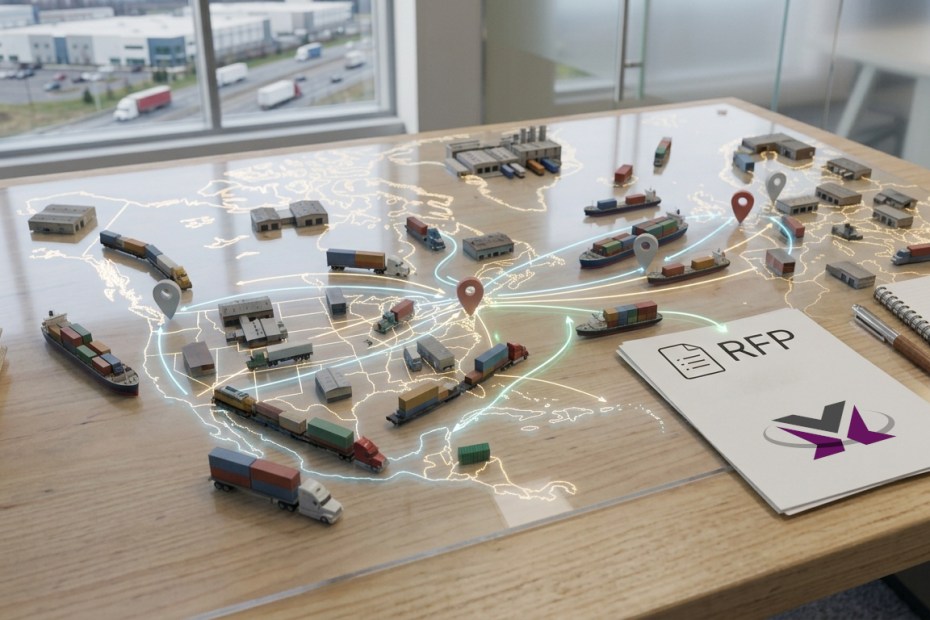
At some point in the process of selecting a 3PL partner, a business has to step back and understand what it is actually asking a logistics provider to do. This is where data analysis and RFP development become the foundation of a structured 3PL selection process.
The tool that brings this work together is the Request for Proposal, or RFP. A good RFP does two things at once. It gives potential 3PL partners enough accurate information to submit a proposal that reflects the real cost of handling the business. It also forces the brand to clearly define its logistics profile, often for the first time.
That second function is more valuable than it might seem. Many growing D2C brands have never compiled their fulfillment data in one place. They may know roughly how many orders they ship each month, but they haven’t looked closely at SKU distribution, average outbound package weight, seasonal changes in order volume, or the percentage of orders that require special handling. Building an RFP brings those details together.
What the Data Analysis Covers
The analysis starts with the monthly order trend, typically across the most recent twelve months. Volume alone isn’t enough. A business shipping 3,000 orders a month on average might peak at 7,000 in November and fall to 1,200 in February. That swing matters to a 3PL partner because it affects staffing requirements and the warehouse capacity that needs to be available during peak periods.
Beyond order count, look at the average number of line items picked per order, the total number of active SKUs, and the percentage of orders containing multiple items. A business with a high average number of line items per order has a very different operational footprint from one where most orders contain a single product. These figures provide an early indication of how labor-intensive the fulfillment operation will be.
Product characteristics come next. Physical dimensions, packaged weight, pallet configuration, and whether products arrive on single-SKU or mixed-SKU pallets can all affect how a 3PL partner prices storage, inbound handling, and put-away.
A logistics provider needs this information to determine whether the products are a good fit for its facility and to develop an accurate proposal.
Product type also shapes the list of potential partners. Some logistics providers have built their operations around high-value, compact products. They may be well suited to consumer electronics, skincare, or similar products where the value-to-volume ratio is favorable and packaging is relatively straightforward.
Other providers specialize in large or bulky products and have invested in the equipment and warehouse space those products require.
Approaching the wrong type of provider with the wrong product profile rarely produces a competitive proposal. Data analysis and RFP development help identify which providers are worth approaching before the RFP is distributed.
Building the RFP Document
Once the data analysis is complete, the RFP brings everything together into a document that a logistics provider can use to understand the business and price the work.
A well-structured RFP should explain the business, quantify the logistics operation, describe the products, and define the services required.
The business overview explains what the brand sells, who its customers are, and where it is in its growth trajectory. The logistics profile quantifies the operation through order volumes, SKU counts, inbound frequency, storage requirements, and seasonal patterns.
The product section describes the physical characteristics of the inventory being stored and shipped. The service requirements section captures anything that goes beyond standard pick-and-pack, such as kitting, returns processing, or custom packaging.
The RFP should also outline technical requirements. Does the business use Shopify, or does it run on an ERP system that will require a custom integration with the 3PL’s warehouse management system? Integration complexity can vary significantly, and some logistics providers are better equipped to manage it than others.
A brand running a relatively simple Shopify setup has different integration requirements from one operating across multiple sales channels with a legacy inventory system.
Return handling instructions belong in the RFP as well. Many brands overlook this at the beginning of the selection process, which creates problems later.
A 3PL partner that receives returns without clear instructions will typically apply a generic process. The resulting costs and decisions can then be difficult for the brand to predict or control.
This is why data analysis and RFP development should cover the full fulfillment operation rather than focusing only on storage and order volume.
What the RFP Reveals About Potential Partners
Once the RFP is distributed, the response itself becomes data. How quickly does a provider acknowledge receipt? Do they ask relevant questions, or do they submit a generic proposal? Is the pricing clear, or does it require extensive follow-up to understand?
These early interactions provide useful information about the potential partner.
Some logistics providers simply won’t be a good fit for a particular client. Their response to the RFP often reveals that before a formal evaluation takes place.
For example, a provider with a minimum order volume threshold may decline to submit a proposal if the business doesn’t generate enough volume. That is useful information. It narrows the field to providers that are both interested in the opportunity and equipped to handle the work.
The analysis behind a thorough RFP also has value after the 3PL selection process is complete. The logistics profile becomes a baseline for monitoring cost and volume over time. When rates change or the order mix shifts, the same framework makes it easier to identify where the cost structure has moved and why.
Practical Note
Don’t estimate when you can calculate. Use actual shipment data for package weight and shipping zone distribution rather than assumptions. The accuracy of the cost comparison that follows depends on the quality of the data that goes into the RFP.
For businesses evaluating new fulfillment partners, strong data analysis and RFP development creates a much clearer basis for comparing proposals and selecting a 3PL partner that fits the actual operation.
Next Step
Once the RFP is ready, the next step is to put it in front of potential 3PL partners. This is where the selection process starts producing information that cannot be found in a rate card. How providers respond, how quickly they engage, the questions they ask, and how clearly they communicate can reveal a great deal before the cost comparison begins. The next article looks at what businesses can learn from reaching out to 3PL partners and why the outreach process itself should be part of the evaluation.
Part 3: What Reaching Out to 3PL Partners Tells You Before the Numbers Do

About the Author
Serkan Selcuk
Logistics & Supply Chain
Management Consultant
Serkan is a Managing Partner of Middlebank Consulting Group based in the USA. He has wide experience in logistics, supply chain planning and execution. He delivered several projects across FMCG, footwear & apparel retail, automotive and automation industries. This experience has been built through working with organizations across Europe, Asia, Australia and the USA.